
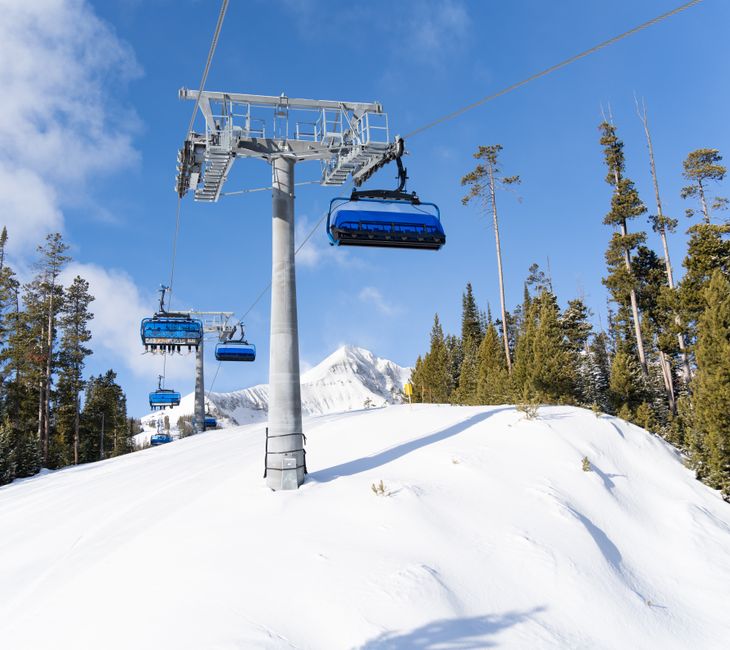
March skiing does not automatically mean soft slush and bare lower slopes. That is the common misconception. The real dividing line is altitude: a resort with a 2,300-metre village and lifts reaching above 3,000 metres can still offer winter snow in the morning, while a lower resort may already feel like late April. The best March choice combines high terrain, a cold overnight freeze, strong grooming, and enough open slopes above the current snowline.
Which March ski resorts hold snow best?
How I ranked snow reliability
For March, I put the most weight on the altitude of the skiable terrain rather than the height of the village alone. I also looked for glacier access, a broad upper mountain, reliable lift infrastructure, and a useful amount of skiing above 2,000 metres. The strongest resorts give you several options when the lower runs turn soft: a north-facing piste, a high glacier sector, or a lift-served bowl that stays cold for longer.
| Resort | Village and high point | March snow verdict |
|---|---|---|
| Val Thorens, France | 2,300m to about 3,200m | Best overall; 99% of the area sits above 2,000m |
| Tignes, France | 1,550m to 3,456m | Excellent high-mountain backup through the Grande Motte glacier |
| Zermatt, Switzerland | 1,620m to 3,883m | Very strong upper-mountain snow, but lower returns can soften |
| Hintertux Glacier, Austria | About 1,500m to 3,250m | Best short-trip insurance; glacier skiing runs beyond the main winter season |
| Saas-Fee, Switzerland | 1,800m to roughly 3,600m | Cold and high, with less linked terrain than the French giants |
What the table leaves out
Altitude does not protect every piste from poor weather. Wind can close exposed lifts, warm rain can damage a lower return route, and a sunny south-facing slope can become heavy before lunch. Val Thorens is my clear all-round winner because its high base, upper lifts, and large linked area create the most usable options on a mixed March day. For a two-day trip where snow matters more than terrain variety, Hintertux Glacier is the safer compact choice; its 2025/26 adult day ticket is listed at €82, while a six-day pass is €327.50.
Why March snow quality depends on more than altitude
Why elevation beats a low valley forecast
A warm forecast in a valley does not describe the snow at 2,800 metres, where temperatures can remain below freezing and new snow can stay light; that vertical gap explains why a resort such as Val Thorens or Tignes may ski well while nearby low runs turn brown, and it is also why checking the snowline, freezing level, and upper-mountain wind forecast gives a better answer than reading the town temperature alone.
Why high altitude is not enough
A summit number can mislead you if the resort offers only a few lifts above 3,000 metres, so the skeptic should ask how much terrain remains open after a warm spell, how many pistes return to the village, and if the high sector is exposed to wind; Zermatt reaches 3,883 metres at Matterhorn Glacier Paradise, but the journey from the village to the upper mountain can take time and some lower descents may feel springlike by mid-afternoon.
The March verdict
Book the highest practical resort with a broad upper mountain and a cold overnight freeze, then ski high early, move toward north-facing terrain as the sun rises, and treat soft afternoon snow as part of the day rather than evidence that the entire resort has failed; for the most predictable March surface, early March favours firmer winter snow while the second half of the month brings better corn snow, longer daylight, and warmer terraces.
The best high-altitude resort for each March trip
Best overall: Val Thorens
Val Thorens is the strongest single answer for most March skiers. The village sits at 2,300 metres, the ski area rises to about 3,200 metres, and the resort states that 99% of its terrain lies above 2,000 metres. That distribution matters more than a flashy summit figure because you can still find workable pistes after several sunny days. Its 150 kilometres of local terrain also create better fallback options than a small glacier area.
The trade-off is exposure. Val Thorens can feel cold and windy, especially on lifts and open ridges, so it suits skiers who value snow cover over tree-lined scenery. The resort’s official snow guarantee also has conditions: closures caused by wind, technical faults, or safety issues do not count the same way as closures caused by insufficient snow. Treat that promise as useful protection, not a guarantee of perfect powder.
Best for glacier access: Tignes
Tignes is my pick for skiers who want a large linked area with a serious high-altitude backup. The Grande Motte glacier reaches 3,656 metres, with the cable car arriving at 3,456 metres, and the Tignes–Val d’Isère domain covers about 300 kilometres of pistes when fully open. In March, that means a warm lower mountain does not end the trip: you can start high, ski the glacier sector, and move lower only when the surface improves.
Tignes also offers a better balance of altitude and variety than a pure glacier destination. The weakness is layout. Getting from one end of the linked area to another takes planning, and a high wind day can limit access to the glacier. Choose Tignes over Val Thorens if you care more about glacier terrain, varied villages, and a long day of exploration than the simplest snow-security calculation.
Best for a short trip: Hintertux Glacier
Hintertux is the practical winner for a short March visit when reliable high snow matters more than a huge piste map. The glacier reaches 3,250 metres and remains a dependable upper-mountain option even when lower Austrian resorts are struggling. Its official 2025/26 winter pricing lists an adult day pass at €82 and a six-day adult pass at €327.50, though dates and future prices should always be checked before booking.
The downside is clear: the ski area is much smaller than Tignes, Val Thorens, or Zermatt, and repeated laps can feel limiting after several days. Zermatt wins for scenery and cross-border scale, but its higher costs and longer lift journeys make Hintertux the sharper choice for a focused two- or three-day snow trip.
How to book a reliable March ski week
Use this decision sequence
- Choose the date before the resort. March 1 to 15 usually gives firmer mornings, colder nights, and a better chance of fresh winter snow. March 16 to 31 offers longer afternoons and softer corn snow but demands more attention to altitude and aspect.
- Set a minimum altitude. For a snow-first trip, target a village at 1,600 metres or higher and a skiable summit above 3,000 metres. A lower village can work only when lifts reach high terrain quickly.
- Check the vertical spread. Count the kilometres of piste above 2,000 metres, not just the resort’s highest lift. A 3,400-metre summit with one exposed run is less useful than a wide 2,400-to-3,200-metre mountain.
- Study the return routes. Confirm that at least two lifts or pistes can bring you back after a warm afternoon. A single low run creates a bottleneck when snow melts or the wind closes the upper lifts.
- Plan each ski day around the freeze. Start with groomed north-facing or glacier terrain, take a break around midday, and use softer south-facing pistes later. This simple schedule often matters more than a small difference in resort altitude.
- Check webcams three to five days before departure. Look for the actual piste surface, open lift count, snowline, and lower-run coverage. Marketing claims describe a resort’s potential; webcams show the trip you are about to take.
- Build in an altitude adjustment. At a village such as Val Thorens, drink more water, avoid a hard first afternoon, and expect sleep to feel different. A tired skier often blames the snow for a bad day that started with poor acclimatisation.
When not to choose the highest resort
Skip the very highest base if your group includes non-skiers who need easy valley access, if anyone reacts badly to altitude, or if your priority is tree skiing during stormy weather. A lower resort with lifts above 2,500 metres and extensive snowmaking can be a better experience than a wind-exposed glacier destination. High altitude improves the odds; it does not remove travel time, lift closures, cold, or terrain limits.