
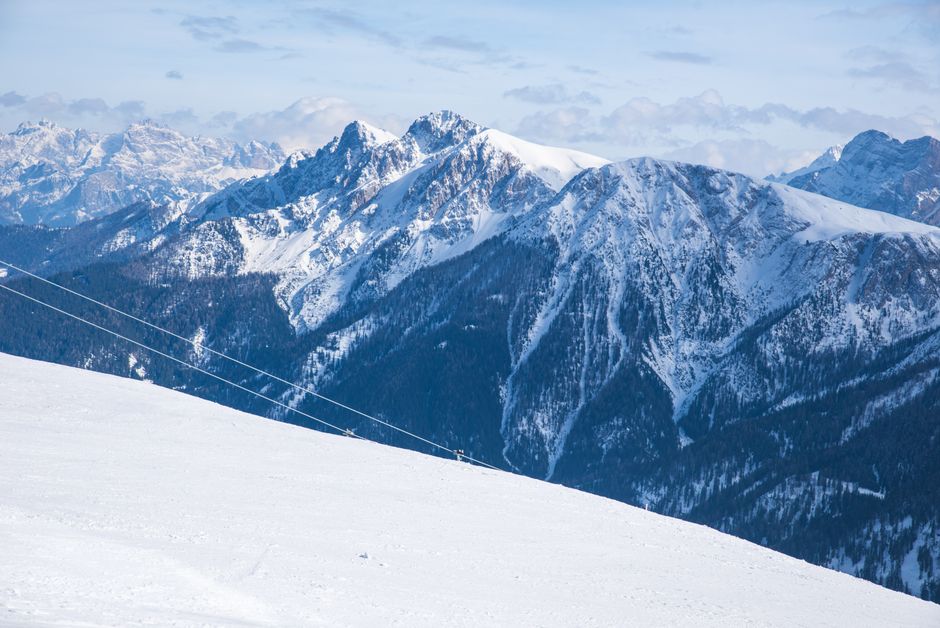
January is not late season in the Alps. It is the first proper ski month after the Christmas rush. That distinction matters. The crowds usually thin sharply after the first Sunday of January, while snowpack, lift operations, and accommodation prices often improve. The best window is usually the second or third week, not New Year and not the final week before February school holidays.
For quiet January powder, altitude beats reputation. You want a high village, north-facing terrain, a compact lift system, and enough sheltered skiing for a bad-weather day. A famous resort with 300 kilometres of pistes can be a worse choice than a smaller area with reliable snow and five-minute lift queues.
Why the second half of January is the smart snow window
The basic problem is timing. Early January still carries the holiday crowd, while February brings school-holiday traffic across much of Europe. The middle of the month gives you the cleanest balance: colder snow, lighter restaurants, shorter lift queues, and more choice in hotels.
Altitude matters more than a huge piste map
Set a minimum target of 1,800 metres for the village or the main ski area. A high base does not guarantee fresh snow, but it protects the lower slopes when temperatures rise. Glacier access, north-facing runs, and upper lifts above 2,400 metres add another layer of safety. The ideal resort also has enough terrain below the summit to keep operating when wind closes the highest lifts.
Do not confuse a large ski domain with good January powder. A 600-kilometre area may include long valley runs that turn icy or thin. A compact resort with 100 kilometres of well-linked pistes can deliver more useful skiing because you spend less time traversing and waiting.
Use a three-part snow check before booking
Check the historical snow pattern, the current base depth, and the short-range forecast. Historical averages tell you the resort’s normal shape, not what you will find on arrival. A base-depth report shows current coverage but says little about snow quality. The 72-hour forecast tells you if a storm is coming, but it cannot repair poor coverage across an entire valley.
My rule is simple: book a high resort with a strong upper mountain, then watch the forecast during the final week. Do not pay a premium for the word powder when the resort’s webcams show bare grass beside the village.
Five quiet Alpine resorts that earn a January shortlist
The best choice for most January powder hunters is Saas-Fee. The village sits around 1,800 metres, skiing reaches above 3,500 metres, and the car-free layout keeps road traffic and resort noise low. The tradeoff is a smaller ski area than the mega-domains and a high-alpine feel that can be severe in poor weather.
- Saas-Fee, Switzerland: Best for high-altitude snow security and a genuinely calm village. Choose it when snow reliability matters more than nightlife or endless linked pistes.
- Aletsch Arena, Switzerland: Best for sunny views, uncrowded intermediate skiing, and a spread-out mountain experience. Choose it for long scenic days, not deep storm skiing.
- Avoriaz, France: Best for a snow-sure, ski-in ski-out base with access to the Portes du Soleil. Its 1,800-metre position helps in January, but the wider domain can attract day visitors.
- Obertauern, Austria: Best for a compact, high village and easy lift circulation. The resort sits around 1,740 metres and is practical for groups that want to return to the same base each day.
- Laax, Switzerland: Best for advanced skiers, park riders, and a modern mountain setup. It offers more terrain variety than a tiny village resort, but prices and weekend demand can rise quickly.
The clear winner for powder reliability
Saas-Fee wins if your priority is cold snow and a quiet base. Its high lifts give January storms room to build a useful upper-mountain snowpack. The village is not the answer for people who need hundreds of linked pistes or a loud après scene. That is a feature, not a flaw, for this trip.
The clear winner for easy logistics
Avoriaz wins for groups with mixed ability. Beginners can use local learning areas, stronger skiers can move into the Portes du Soleil, and ski-in ski-out access removes daily bus transfers. For the 2025–26 season, the published adult cash price for a one-day Portes du Soleil pass is €73, while a six-day pass is €373 before any online pricing or promotion. Buy the larger area only if you will actually cross into it.
How to choose a quiet resort without paying for empty claims
A resort is not quiet simply because its marketing page uses the word peaceful. Test the claim against the calendar, village layout, lift design, and transport pattern. A resort can feel empty at 8:30 a.m. and crowded by 10:30 when day visitors arrive from a nearby city.
Score the resort on five practical signals
- Calendar: Target Sunday-to-Friday stays from roughly January 11 to January 23, 2026, or the matching mid-month window in another season. Avoid local school holidays and long weekends.
- Village height: Prefer a base around 1,700 metres or higher when snow cover is a major reason for the trip.
- Lift design: Look for several lifts leaving the village. One gondola creates a bottleneck even when the slopes are quiet.
- Accommodation spread: A resort with apartments across several neighbourhoods usually feels calmer than one with a single packed pedestrian centre.
- Weather fallback: Confirm that the area has tree-lined pistes, a swimming pool, a museum, or a nearby town for storm days.
Then check the first-lift pattern. A family resort with lessons starting at 9:30 may feel empty before breakfast and busy after the first class wave. A high-altitude destination with exposed lifts may feel quiet because the wind has closed half the mountain. That is not the kind of quiet you want.
Build a seven-day booking test
Before paying, map the nearest airport or railway station, the final transfer time, the village altitude, and the number of open sectors needed for a good day. Add a 20 percent weather buffer to the transfer plan. Mountain roads can close, trains can run late, and a cheap room becomes expensive when it requires two extra taxis.
For a six-day stay, calculate the adult lift cost, transfer, equipment hire, and one rest-day activity separately. Avoriaz lists a €326 adult five-day Portes du Soleil pass and €373 for six days at the 2025–26 cash rate. Those figures make a compact local pass attractive when your group will ski one sector repeatedly.
What can ruin a January powder trip?
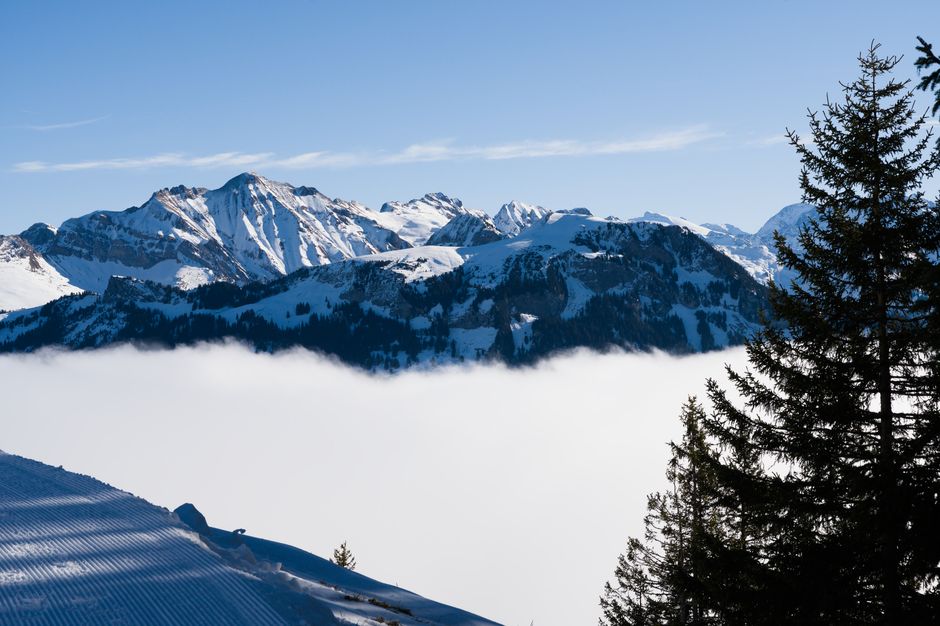
Most bad ski trips fail before the first lift opens. The problem is usually a poor match between the resort and the group, not a lack of snow.
Are high resorts always the safest choice?
No. High altitude improves snow retention, but wind can close exposed lifts and create hard, scraped surfaces. Check the resort’s lower and middle terrain before booking. A good January base has both high snow security and sheltered alternatives.
Should you wait for a forecast before booking?
Waiting until the forecast is perfect can leave you with poor rooms, expensive transfers, and no equipment availability. Book a cancellable room early, then make the final snow call when the 10-day forecast becomes useful. Do not make a non-refundable payment six months out because a brochure shows a photograph of fresh powder.
When should you skip the famous resort?
Skip the famous name when its main advantage is nightlife, a massive brand, or a long piste count that your group will not use. Do not choose Laax for a quiet beginner holiday just because it has a strong snow-sports reputation. Do not choose Avoriaz if you dislike ski-in ski-out apartment blocks and busy transfer days. Do not choose a glacier resort if your group wants tree runs during storms.
The strongest booking is the one that still works after two days of wind, flat light, or closed upper lifts. That means checking terrain variety, not just the top elevation.
January resort verdict: match the mountain to the trip
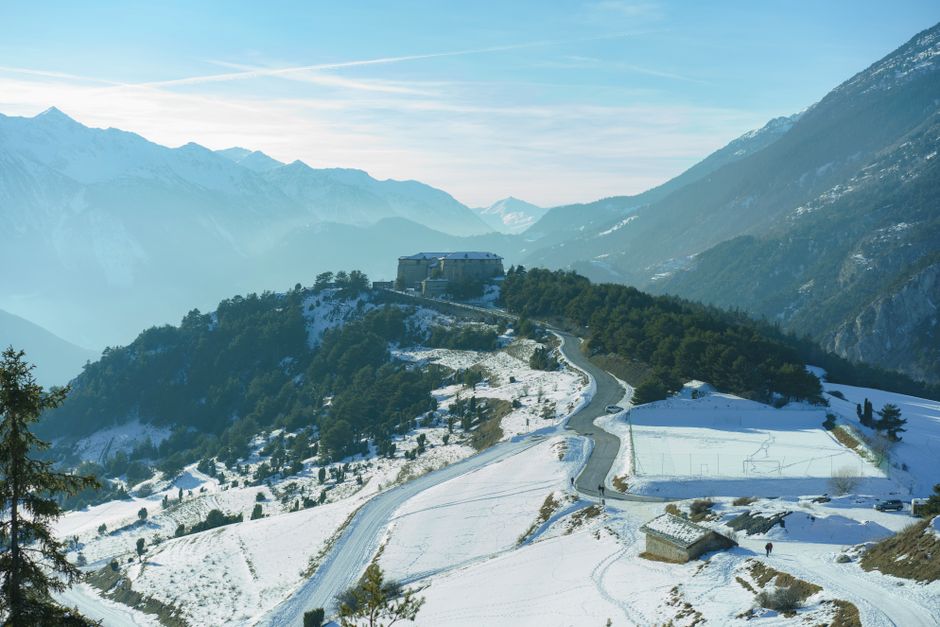
There is no prize for buying the largest lift pass. The smart choice is the resort that protects the part of the trip you care about most: cold snow, quiet evenings, easy logistics, or varied terrain.
The short verdict
For the best mix of quiet streets and January snow reliability, choose Saas-Fee. For mixed groups and simple ski-in ski-out logistics, choose Avoriaz. For scenic intermediate skiing, choose Aletsch Arena. For a compact Austrian base, choose Obertauern. For advanced terrain and parks, choose Laax.
Comparison summary
| Resort | Best for | Key figure | Main drawback |
|---|---|---|---|
| Saas-Fee | Cold snow and quiet evenings | Village around 1,800 m; skiing above 3,500 m | Smaller linked area |
| Aletsch Arena | Views and uncrowded intermediate pistes | Four main ski areas linked by lifts and transport | Less convincing for deep storm skiing |
| Avoriaz | Mixed groups and ski-in ski-out access | Adult six-day Portes du Soleil pass: €373 cash rate for 2025–26 | Day visitors can add pressure |
| Obertauern | Compact Austrian skiing | Village around 1,740 m; roughly 100 km of pistes | Limited big-domain variety |
| Laax | Advanced skiers and park riders | About 214 km of marked pistes and freeride routes | Higher prices and busier weekends |
Book the second or third January week, choose altitude with a weather fallback, and treat quietness as a measurable feature. That is how you get powder without paying holiday-crowd prices.