
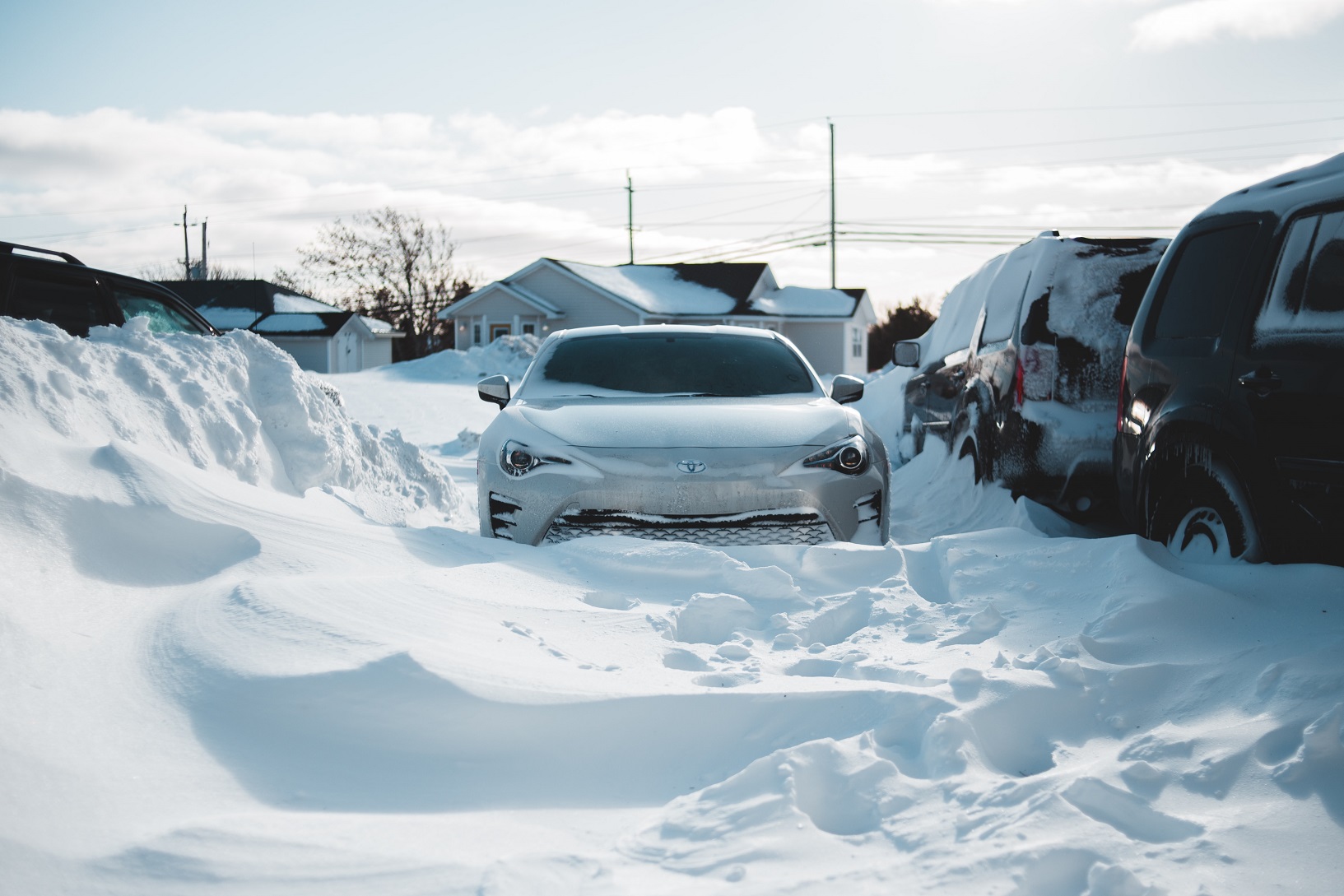
You book a ski trip to the Austrian Alps. Everything runs smoothly until day four, when an overnight storm drops 70 centimetres of snow and you wake up to a cancelled flight, a closed mountain road, and a rental car fitted with all-season tyres that won’t grip the sloped car park. This scenario plays out for thousands of travellers every winter. Not because of bad luck — because snowfall risks are consistently underestimated at the planning stage.
How Heavy Snow Cascades Through Flight and Rail Networks
Snow doesn’t just delay things. It triggers failures that stack on top of each other, and understanding how that cascade works helps you act faster than other stranded travellers when things unravel.
Why One Snowstorm Can Ground Hundreds of Flights
De-icing a single aircraft takes 15 to 45 minutes. At a busy hub during heavy snowfall, that multiplies across hundreds of planes simultaneously, creating backlogs that take hours to clear. Your aircraft might be perfectly ready — but the inbound plane bringing it to your gate could be sitting stationary in Frankfurt. That’s already your flight gone before you’ve checked in.
Airlines declare a Ground Stop when snow accumulates faster than runways can be cleared. No aircraft moves during one. They typically last 2 to 12 hours. A 45-minute layover when a Ground Stop is in effect is mathematically impossible to make.
Booking the cheapest itinerary with a 40-minute winter connection is a specific kind of planning failure. Minimum connection time collapses to near zero when weather events slow an entire hub. A 90-minute layover on a winter route through Amsterdam Schiphol or Frankfurt is a real buffer. Forty minutes is not.
Use Flightradar24 on the morning of any winter departure to track your inbound aircraft in real time. If your plane is sitting stationary somewhere else two hours before departure, you know before the gate agent does. That window is enough to call the airline directly and join the rebooking queue before hundreds of other passengers realise what’s happening. Download your airline’s app before every winter trip — airlines push rebooking offers through the app before updating departure boards, and accepting one takes 30 seconds rather than four hours.
In January 2026, Heathrow cancelled over 50 flights during a single 10cm snowfall event. That’s a modest accumulation. Major hubs handle this particularly badly because any delay ripples simultaneously through dozens of connecting itineraries.
Train Delays in Snow: More Predictable, Less Catastrophic
Rail handles light snow better than flying. Intercity trains on electrified main lines — Deutsche Bahn ICE, Trenitalia Frecciarossa, Eurostar — all run specific snow operating protocols. Rail failures in snow come down to three causes: overhead line ice triggering electrical failure, frozen track switches backing up every train through a junction, and sudden overcrowding when cancelled flights push passengers onto rail at short notice.
Eurostar is specifically vulnerable to temperature extremes. The Channel Tunnel runs at a constant 18°C inside. When trains exit into cold air at the portals, condensation forms on warm electrical components and causes faults. This has delayed or cancelled services multiple times during cold snaps.
Check live rail status on the operator’s own app rather than third-party aggregators. National Rail in the UK refreshes delay data every 90 seconds during disruption events. Third-party platforms frequently lag by 15 minutes or more — which matters significantly when you have a tight connection.
The Tyre Gap That Catches Most Winter Drivers
Driving in heavy snowfall with all-season or summer tyres is the single most avoidable risk in winter travel. The stopping distance difference is not marginal — it is the difference between stopping before and stopping after the car in front of you.
| Tyre Type | Braking Distance (50km/h to 0) | Ice Performance | Legal in Austria/Germany/Switzerland? |
|---|---|---|---|
| Summer tyre | ~35m | Poor | No |
| All-season (M+S rated) | ~28m | Moderate | Conditional |
| Michelin X-Ice Snow | ~22m | Good | Yes |
| Bridgestone Blizzak WS90 | ~21m | Very good | Yes |
| Snow chains (packed snow only) | ~18m at 25km/h max | Excellent on packed snow | Required on some passes |
The Bridgestone Blizzak WS90 edges out the Michelin X-Ice Snow on black ice. The X-Ice lasts longer across multiple seasons. Both are dramatically better than all-season tyres in actual snowfall. When hiring a car in any Alpine country between November and April, confirm in writing that the vehicle has dedicated winter tyres — not M+S-rated all-seasons, which are a compromise product, not a true winter tyre.
When to Leave the Rental Car and Use Public Transport Instead
Austria, Switzerland, and Norway legally require rental companies to fit winter tyres during cold months. The UK, France, and the United States have no such requirement. If you’re picking up a rental in Edinburgh in January and planning to drive the A9 through the Cairngorms, ask explicitly at booking. If the company can’t confirm winter tyres in writing, take ScotRail’s Highland Main Line to Aviemore instead — it runs through most snow events and beats a stressed drive on ungritted roads.
GPS Routing Doesn’t Know What Roads Are Closed
Google Maps and Apple Maps both pull real-time traffic data, but road closures due to avalanche risk, heavy drifting, or emergency de-icing often lag 2 to 4 hours in navigation systems. In Norway’s mountain roads and Scotland’s Highlands, police close routes at short notice. Your GPS will keep routing you toward a barrier until someone manually updates the database.
Before driving in alpine areas, open the local road authority’s tool directly: Traffic Scotland live map in the UK, Vegvesen’s Vegkart in Norway, ASFINAG’s closure map in Austria. These pull from traffic control centres, not crowd-sourced reports, and include timestamps on each closure.
Wet Snow and the Hypothermia Risk That Moves Faster Than Expected
Wet snow — the heavy, soaking kind that falls at just below freezing — saturates regular clothing within minutes. Hypothermia can develop in 30 minutes in wet 1°C conditions when cotton layers are worn. This isn’t a wilderness risk. It’s what happens to city travellers whose jacket has failed seams or an unzipped collar. The SOL Escape Bivvy (~£12 / $15) weighs 100 grams, fits in any bag, and buys hours of survival warmth. Pack one.
Seven Things to Pack When Snowfall Is Forecast
Not expedition gear. Seven targeted items that close the actual risk gaps:
- Seam-sealed waterproof jacket, minimum 10,000mm rating. The Patagonia Torrentshell 3L ($179) and Montane Phase XT (~£200) both hit this threshold and compress to the size of a water bottle.
- Merino wool base layer. Wool retains warmth when wet; synthetic fleece doesn’t. Smartwool Classic Thermal base layer tops (~$95) are the reliable benchmark for this category.
- Insulated waterproof gloves. Bare hands at 0°C in wet snow lose fine motor control in under 10 minutes. Hestra Army Leather Patrol gloves (~$120) are what mountain rescue teams use on call-outs.
- Yaktrax Walk traction cleats (~$30). Slip them over any shoe or boot on icy pavements. Black ice on city streets injures more winter travellers than mountain terrain. Most people skip this. Most people also fall.
- Anker PowerCore 10000 battery pack (~$22). Cold kills phone batteries — a phone fully charged indoors can drop to 60% effective capacity at -10°C. This pack fits in a jacket pocket and gives three full charges.
- SOL Escape Bivvy or Mylar emergency blanket. Smaller than a paperback book. Essential for any car journey or mountain day in winter conditions.
- Garmin inReach Mini 2 (~$350). For ski touring, snowshoeing, or remote mountain drives: this satellite communicator transmits GPS coordinates to rescue services when mobile networks fail. Unnecessary for city travel. Non-negotiable for anything remote.
Travel, Wait, or Cancel: How to Make the Call
How much snow is too much to drive in?
Road authorities and emergency services use these rough working thresholds:
- 5–10cm: Caution on ungritted secondary roads. Reduce speed by at least 30%.
- 10–25cm: Avoid mountain passes and uncleared roads without 4WD or dedicated winter tyres.
- 25cm+: Major disruption across all transport modes. Rail and airlines run reduced schedules. Don’t drive on uncleared routes.
MyRadar (free on iOS and Android) shows hourly snowfall accumulation forecasts rather than a generic storm warning. If the storm peaks at 6am and clears by 10am, travelling after noon is fine. If accumulation runs continuously through the day, that’s a rescheduling situation. Check your airline’s rebooking policy before you travel — budget carriers often charge €50 or more in change fees even during declared weather events, while Lufthansa, British Airways, and Air France typically waive fees during major storm windows if you rebook before the original departure time.
Does travel insurance cover snowstorm disruptions?
Standard policies cover cancellations when the travel provider officially cancels the service. If you decide not to travel because the forecast looks bad, you’re not covered. A “cancel for any reason” (CFAR) add-on changes this — it refunds roughly 75% of trip cost but adds 40–50% to your premium. For a winter mountain trip where snowstorm disruption is a realistic probability rather than a remote edge case, CFAR is worth pricing before you book.
When is the right moment to decide?
Make the call at the 72-hour forecast window, not the morning of departure. Decisions made 48+ hours in advance are cheaper and more flexible — airlines grant free date changes well before the formal cancellation window, and hotels shift without penalty fees. At 24 hours, every option costs more. Most travellers wait until the morning of, when the forecast has been accurate for two days and all the flexible options are already gone.
You’re Already Caught in Heavy Snow — What to Do Now
Stop driving before it feels necessary. Every year, travellers end up stranded overnight on motorways because they kept going past the obvious moment to pull off, expecting conditions to improve. In heavy snow, they rarely do quickly. Pull off at a service station, hotel, or town — not a roadside layby on an exposed motorway stretch.
If stuck in the car: don’t leave the vehicle unless you can see shelter within 100 metres. Run the engine in 10-minute intervals for heat rather than continuously, and check the exhaust pipe isn’t buried in snow before starting it — carbon monoxide accumulates inside with a blocked exhaust. Use your emergency thermal blanket to retain body heat, not just cover your legs.
If stranded at an airport: rebook immediately using the airline’s direct app or phone line — not the gate queue. Under EU Regulation 261/2004, airlines departing from EU airports owe stranded passengers meals and hotel accommodation during significant delays. Compensation for the delay itself may not apply if snowfall is classified as an extraordinary circumstance, but duty-of-care obligations — food, accommodation, and communication — apply regardless. Get written confirmation via the airline’s app chat or email.
On foot in a city: the primary hazard isn’t active snowfall — it’s black ice forming at dusk when daytime melt refreezes on pavements. Most fractures and sprains in winter travel happen in the evening, not during the storm itself. Yaktrax Walk cleats prevent nearly all urban slips. European cities built for snow — Warsaw, Helsinki, Riga — function normally through heavy falls. Cities not built for it — London, Paris, Rome — get paralysed by 10cm. Know which type of city you’re in and adjust your expectations for surface transport accordingly.
Back to the Austrian ski trip from the opening. The travellers who got home without drama had done five things the evening before: checked MyRadar’s hourly chart to see when the storm would break, confirmed via Flightradar24 that their inbound aircraft was already parked in Vienna, got written confirmation from the rental desk about winter tyres, opened ASFINAG’s live map to check the mountain pass, and saved the airline’s rebooking number in their contacts. They left two hours earlier than planned, the road was passable, and when their original flight was delayed by three hours they were already rebooked on an earlier departure. Five things. Fifteen minutes of prep the evening before.