
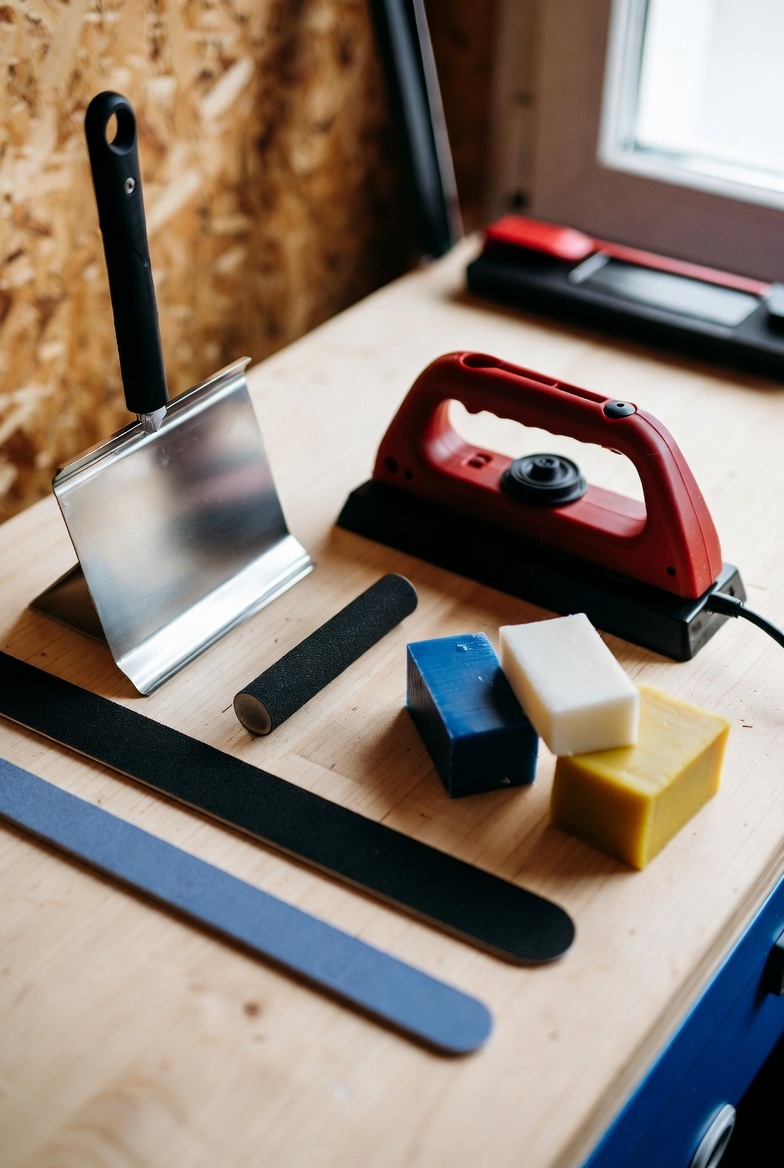
Setting Up Your Home Tuning Station
Creating a dedicated space for ski maintenance is the first step to keeping your gear in top shape. You don’t need a fancy workshop—a simple, stable surface like a sturdy workbench or table will do. Good lighting is crucial; bright, even light helps you spot scratches, dents, and edge rust clearly.
To hold your skis steady, invest in reliable ski vises. These clamps keep your skis secure while you work, making tasks like filing edges or waxing easier and safer. Don’t forget brake retainers—they hold your ski brakes up and out of the way, preventing them from snapping shut while you tune.
Safety is a must. Always wear gloves to protect your hands from sharp tools and hot wax. An apron will keep your clothes clean, and eye protection shields you from flying debris or splashes during repair work. Setting up your home tuning station with these essentials ensures you have a safe, efficient area for ski care anytime you need it.
Core Tools for Base Repair and Preparation
When it comes to fixing your skis’ base, having the right tools makes all the difference. Start with P-Tex candles and repair kits to fill in gouges and scratches—these are essential for keeping your base smooth and damage-free. After applying P-Tex, use metal and plastic base scrapers to remove any excess material and get a clean, even surface.
To ensure your base is perfectly flat, a true bar is a must-have. It helps spot any high or low spots that can affect your glide. Follow up with a gummy stone to deburr edges and gently remove any roughness. For those wanting to enhance their speed and control, base structure tools can refresh the glide pattern, tailoring your skis to different snow conditions.
Getting this right not only improves your ride but also saves you money by preventing bigger repairs later. For a smooth journey, make base repair part of your regular ski maintenance routine. If you’re gearing up for your next adventure, check out this what to pack for a ski trip guide for more tips on preparing your gear.
Essential Waxing Tools
A good ski waxing iron is key for effective hot waxing. Look for one with precise temperature control—too hot can damage your base, too cold won’t melt the wax properly. Using the right temperature stops you from ruining your skis and helps the wax soak in evenly.
There are all-temperature waxes that work well in varying snow conditions, plus specific waxes made for cold, warm, or wet snow. Having a few types on hand lets you match your wax to the day’s weather for better glide.
For application and finishing, you’ll need a base scraper to remove excess wax once it cools, plus brushes in nylon, horsehair, or bronze to clean and polish the base. A cork is also handy to rub over the base after scraping, smoothing out any rough spots for a slick finish.
Here’s a quick hot waxing step-by-step:
- Heat your iron to the right temp for your wax
- Drip wax evenly on the base
- Spread wax with the iron, moving continuously to avoid burns
- Let wax cool (15-30 minutes)
- Scrape off the excess wax with a plastic scraper
- Brush the base thoroughly to restore structure and shine
- Use a cork for final smoothing
Proper waxing tools and technique keep your skis fast and protected. Building this part of your ski tuning kit makes a big difference in how your skis perform on the slopes. For more insights on ski gear and maintenance, check out why skiing is an insanely rewarding sport.
Edge Sharpening and Tuning Tools
Keeping your edges sharp is key for solid grip on hardpack and icy slopes. Start with edge bevel guides and multi-angle tuners to set the right angle for your skis—usually between 88° and 90° for the side edges, depending on your style and conditions. These guides ensure consistent sharpening and help you avoid over-beveling.
For sharpening, use files and diamond stones of various grits. Coarser files remove nicks and shape the edge, while finer diamond stones polish and refine it for smooth turns. Don’t forget polishing tools that brighten the edge and reduce drag.
A sidewall planer is essential to cleanly remove excess sidewall material before filing, giving you clear access to the metal edge and preventing uneven sharpening.
Proper edge tuning dramatically improves your control and safety, especially when skiing on hard or icy terrain. For a deeper dive into ski prep basics, check out this detailed ultimate guide to prepping your gear.
Must-Have Diagnostic and Finishing Tools
To keep your skis in top shape, having the right diagnostic and finishing tools is key. Gummy stones and fibertex pads are essential for removing rust and smoothing out burrs on your edges after filing. They help maintain sharpness and prevent damage from rough or corroded metal.
For the base, a range of ski brushes—nylon, horsehair, and bronze—along with polishers, give you a clean, fast finish after waxing. These brushes remove excess wax and restore the base structure, improving glide on snow.
Don’t forget about storage—using proper cases, straps, and organizers keeps your tools safe and handy. A well-organized kit means faster, more efficient tune-ups every time you hit the slopes. For more prep tips before your next trip, check out this winter sports prep guide.
Building Your Kit: Beginner vs. Advanced Options
Choosing the right ski maintenance tools depends on how often you hit the slopes and how deep you want to get into tuning. Here’s a quick guide to help you build your ideal ski tuning kit.
| Tool Category | Beginner Kit | Advanced Setup |
|---|---|---|
| Ski Vise | Basic clamp-style vise | Heavy-duty adjustable vises for precision |
| Base Repair Tools | P-Tex candles, simple base scraper | Full set including true bars, base structuring tools |
| Waxing Gear | All-temperature wax, basic waxing iron | Multiple waxes (cold/warm), temperature-controlled iron |
| Edge Sharpening | Single-angle edge sharpeners, basic files | Multi-angle tuners, diamond stones, sidewall planers |
| Finishing Tools | Gummy stones, nylon brushes | Horsehair and bronze brushes, fibertex pads |
Starter Kit Tips for Occasional Skiers:
- Focus on simple and versatile tools.
- Prioritize a decent waxing iron and basic edge sharpener.
- Keep P-Tex repair candles handy for quick fixes.
- Consider budget-friendly vises and scrapers.
Comprehensive Kits for Frequent Riders:
- Invest in adjustable edge bevel guides for better grip.
- Add base structure tools to refresh glide patterns.
- Use condition-specific waxes and different brushes.
- Advanced sidewall planers improve edge life.
Budget Considerations:
- Start small and upgrade tools gradually.
- Prioritize items that cover safety and performance first (vise, waxing iron, edge sharpener).
- A solid home ski tune setup often saves money on pro tuning in the long run.
Building the right kit for your needs sets you up for smoother rides and longer-lasting skis. For more tips on preparing for your dream ski trips, check out this helpful guide to trip prep and gear care.
Maintenance Tips and Best Practices
Keeping your skis in top shape means regular maintenance with the right timing. Aim to wax your skis every 4 to 8 days on the snow to keep the base hydrated and fast. Edge sharpening depends on conditions and use—sharpen when you notice less grip on hardpack or icy runs.
Avoid common mistakes like overheating your waxing iron or applying wax unevenly, as these can damage your base or reduce glide. Don’t skip cleaning your edges and base before tuning; removing old wax and dirt is essential for a smooth finish.
When storing skis off-season, clean and thoroughly dry them, then apply a thick coat of wax without scraping it off to protect the base from drying out. Store skis in a cool, dry place away from direct sunlight and extreme temperature changes. Using protective cases or straps helps prevent damage and makes your gear last longer.
For more seasonal care tips, check out advice on preparing for ski trips and staying in shape to make the most of your time on the slopes.