
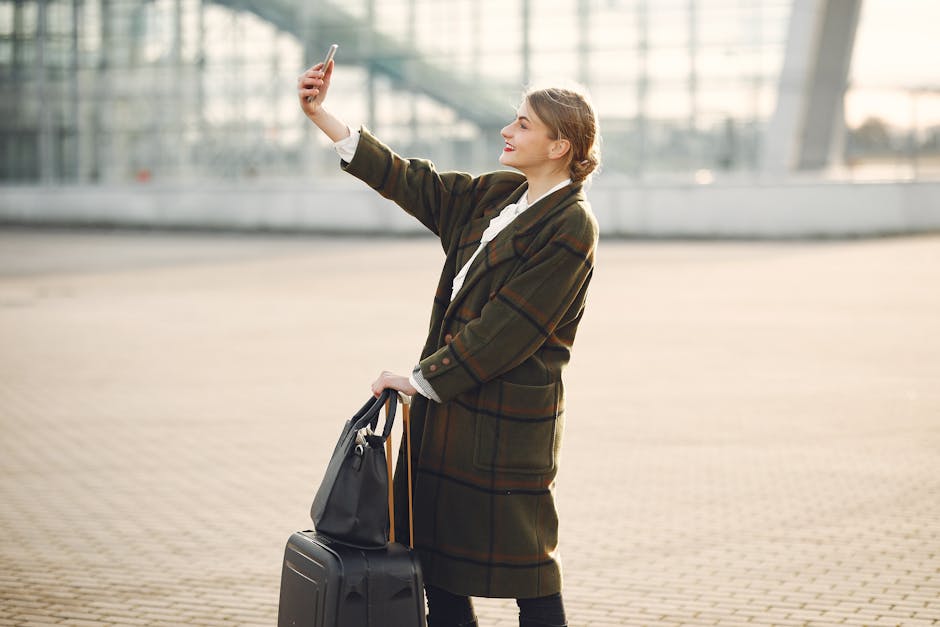
The most important decision you will make before any weekend trip happens before you touch a single item of clothing: choosing the right bag. Get that wrong, and every packing decision that follows cascades into frustration.
A 48-to-72-hour trip rarely requires more than 25 to 40 liters of carrying capacity. Travelers who default to full-sized checked luggage for short trips typically end up paying bag fees, waiting at carousels, and hauling oversized bags through narrow hotel hallways. Most experienced frequent travelers have converged on carry-on-only for weekend trips — and the evidence from travel communities consistently supports that conclusion.
Bag Selection: The Foundation of Every Weekend Trip
Three bag types dominate weekend travel. Each has a clearly defined use case, and picking the wrong one for your specific trip type is one of the most common — and most correctable — mistakes short-trip travelers make.
Backpacks vs. Duffels vs. Hard-Shell Carry-Ons at a Glance
| Bag Type | Best For | Capacity | Example Product | Price Range |
|---|---|---|---|---|
| Travel Backpack | Multi-stop trips, active itineraries, budget airlines | 35–45L | Osprey Farpoint 40 | $160–$220 |
| Soft Duffel | Domestic drives, beach trips, casual travel | 30–50L | Herschel Novel Duffle | $90–$130 |
| Hard-Shell Carry-On | Business trips, urban hotels, frequent flyers | 35–45L | Away The Carry-On | $275–$325 |
The Osprey Farpoint 40 — Best All-Round Pick
The Osprey Farpoint 40 ($180, 40L) handles most weekend trip scenarios without issue. It meets carry-on size requirements on most major airlines (22 x 14 x 9 inches), opens completely flat for easy packing, and includes a lockaway harness system so straps stow neatly when you need a sleeker profile. The hip belt meaningfully distributes weight on longer walks between transit points.
It weighs 1.79kg empty — heavier than ultralight alternatives, but the structure protects contents better than soft bags in crowded overhead bins.
Away The Carry-On — Best for Urban Hotel Stays
The Away The Carry-On ($295, 39.8L) has a built-in USB-A port powered by a removable 6,700mAh battery. TSA requires you to remove that battery at security — it takes about 10 seconds once you know what you are doing. The interior compression panel and included laundry bag are genuinely useful, not marketing filler.
Where it falls short: four-wheel spinners struggle badly on cobblestone streets in older European towns. For beach destinations or anywhere without smooth pavement, a backpack wins consistently.
One practical note worth flagging: carry-on enforcement varies significantly by carrier and route. Budget airlines like Spirit and Frontier typically enforce personal item and carry-on dimensions more strictly than major network carriers. Confirming your bag dimensions against your specific airline’s current policy before reaching the gate is worth the five minutes — enforcement there can mean unexpected fees on a trip that was supposed to be cheap.
Building a TSA-Compliant Toiletry Kit That Doesn’t Leak
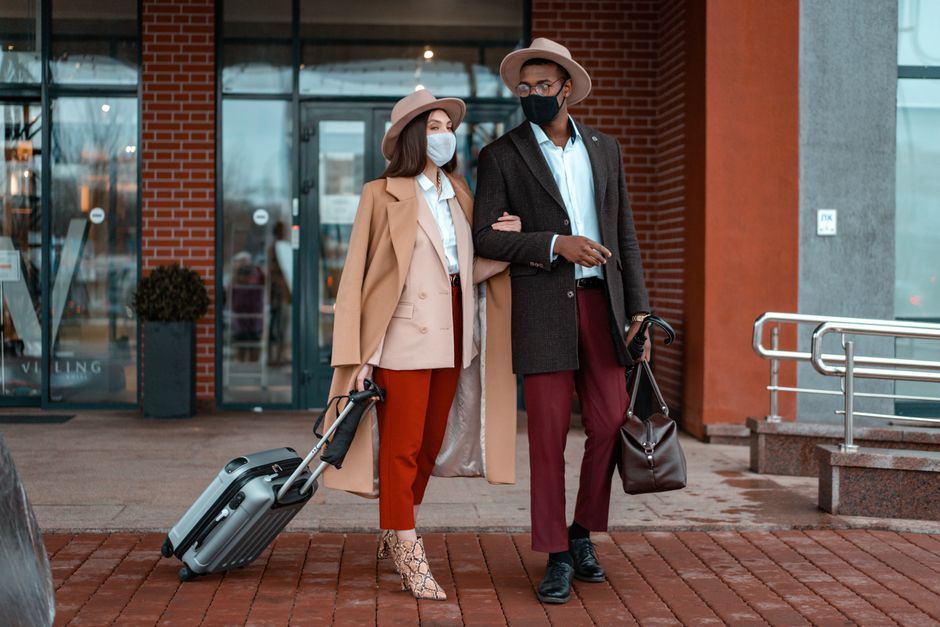
The toiletry kit is where most weekend travelers either under-prepare or overload. TSA’s 3-1-1 rule — liquids in containers of 3.4 oz (100ml) or less, all fitting in one quart-sized clear bag — applies to carry-on bags on domestic and international flights departing U.S. airports. Violations result in confiscated items at the checkpoint, not fines, but the disruption and annoyance are real. Plan accordingly, and confirm rules for international departures separately, as other countries’ aviation authorities set their own thresholds.
Containers That Hold Up to Actual Use
The Matador FlatPak Toiletry Case ($30) compresses completely flat when empty — that matters because collapsed toiletry bags sink to the bottom of a packed bag and waste space they shouldn’t occupy. Rated waterproof to IPX6, the magnetic closure holds reliably across dozens of trips. For a 3-day trip it holds full essentials while keeping you comfortably under TSA volume limits.
Muji travel bottles (set of 4 for approximately $8) are the consistent recommendation across experienced travel communities because they reliably do not leak, they are refillable, and they are cheap enough to replace without regret. Silicone-tipped nozzle designs leak less frequently than standard screw-cap alternatives — a detail that matters when they are tucked next to a laptop.
Rolling clothes rather than folding typically reduces wrinkles and allows more volume per packing cube. The Eagle Creek Pack-It Specter Cubes (set of 3 for $35, ultralight ripstop nylon) keep clothing compressed and separated by category without adding meaningful weight to your bag. One cube for tops, one for bottoms, one for undergarments and socks is the system most experienced carry-on travelers land on.
The Seven Categories You Actually Need for 48–72 Hours
- Shampoo or dry shampoo in a travel-sized container
- Conditioner — skip it if your hotel provides it, and most do
- Facial cleanser
- Moisturizer with SPF (the Glossier Invisible Shield SPF 35, $34, handles most skin types without leaving a white cast and the 1 oz size fits TSA requirements)
- Toothbrush and toothpaste
- Deodorant
- Any prescription medications in their original labeled containers — this is not optional, as airlines and customs authorities in most countries require original packaging for controlled substances and many prescription drugs
The Item Almost Everyone Forgets
Lip balm. Consistently. Aircraft cabins run at roughly 10 to 20 percent relative humidity — well below the 30 to 50 percent range most people find comfortable. Burt’s Bees Original Lip Balm ($4) is the baseline recommendation: inexpensive, stocked everywhere, and effective.
Also worth adding: a compact power strip. Many hotel rooms in older properties offer one accessible outlet near the bed. A small strip like the Belkin Mini Surge Protector ($20, 3 outlets plus 2 USB ports) solves that immediately and costs less than one round of overpriced airport coffee.
The One Packing Rule That Actually Works
Pack the bag completely. Then remove one item.
Every experienced traveler converges on some version of this rule. The item you pull out is almost always something packed on a just-in-case basis — and the just-in-case item is, with reliable consistency, the one that returns home completely untouched.
Tech and Comfort Items That Earn Their Space

Not every piece of tech justifies the weight and volume it occupies. These four consistently do, across most trip types.
- Portable power bank: The Anker 737 Power Bank ($100, 24,000mAh, 140W output) charges a laptop at near-full speed and fully charges most smartphones three to four times over. At 1.56 lbs it is heavier than budget options, but for multi-day trips with limited outlet access, the capacity earns its spot. For phone-only travel, the Anker PowerCore Slim 10000 ($28, 10,000mAh) is the smarter weight-to-value trade.
- Noise-canceling headphones: The Sony WH-1000XM5 ($279) provides the best active noise cancellation currently available in over-ear headphones at this price point. Thirty hours of battery life covers a full travel day comfortably. The Sony WH-1000XM4 has dropped to around $200 and performs comparably in most real-world travel conditions — a meaningful saving for similar results.
- GaN multi-port charger: The Anker 735 Charger ($36, 65W, two USB-C ports plus one USB-A) handles phone, laptop, and earbuds simultaneously from a single outlet. This eliminates carrying three separate charging bricks for a real weight and space reduction. One adapter, one outlet, three devices.
- E-reader: The Kindle Paperwhite ($140, 6.8-inch display, 300 ppi, rated IPX8 waterproof) holds thousands of titles and weighs 7.1 oz. Replacing two or three paperbacks with a Kindle frees meaningful bag space. The waterproof rating makes it genuinely usable at the pool or beach without anxiety about a splash.
One underrated item that does not fit neatly into any category: a collapsible water bottle. Airport bottled water past security typically runs $5 to $7. A collapsible silicone option folds to 2 to 3 inches when empty and takes up essentially no bag space — fill it at any fountain once you clear the checkpoint.
What to Leave at Home
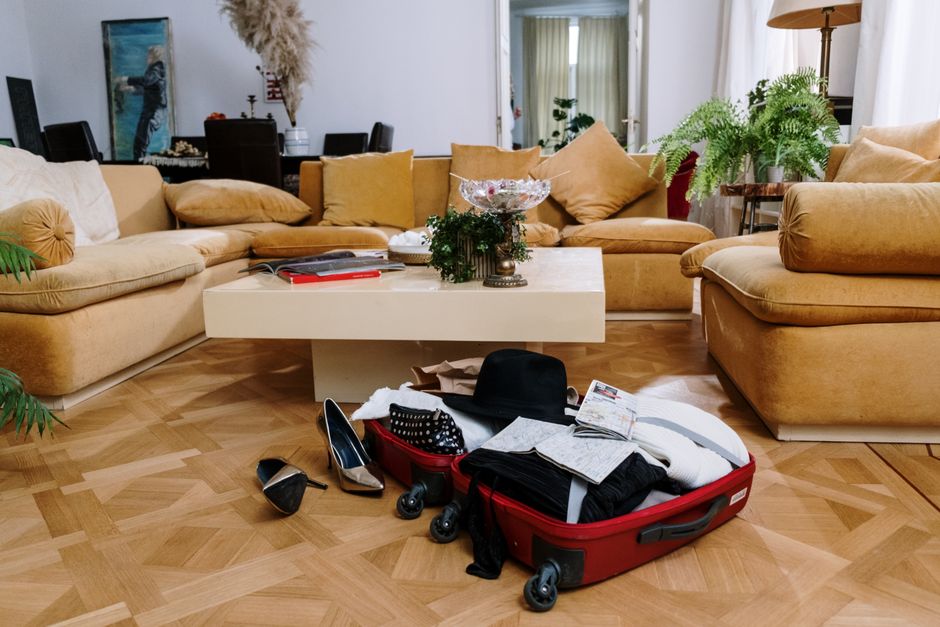
The single most consistent overpacking mistake is the just-in-case outfit — usually something formal or semi-formal packed in case an unexpected occasion arises during the trip. For a 2-to-3-day casual getaway, that occasion almost never materializes. The outfit returns home unworn, having consumed 20 to 30 percent of available bag volume the entire time.
The Clothing Math That Holds Up for Most Trips
For 3 days: 3 tops, 2 bottoms, 3 pairs of undergarments, 3 pairs of socks, 1 insulating layer. That configuration fits comfortably in a 35-to-40L bag alongside toiletries, tech items, and documents. Adding a fourth top just in case is frequently the single decision that pushes a traveler from carry-on-only into checked-luggage territory — a $30 to $50 consequence per flight leg that adds up fast across a year of weekend trips.
Items That Sound Essential and Typically Are Not
- Travel neck pillows for trips under 4 hours — you rarely sleep long enough to justify them, and they occupy substantial space in any bag
- Multiple pairs of shoes — one pair covers most 2-to-3-day urban trips; two pairs is the reasonable maximum for any weekend getaway regardless of destination
- Physical guidebooks for cities with strong mapping app coverage — apps have made these functionally redundant for most urban travel
- Full-sized toiletry backups in case you run out — you will not run out in 72 hours, and hotel front desks stock basics for guests in most properties
When Buying New Gear Actually Makes Financial Sense
Almost never, for most travelers. The bag you already own typically outperforms a new travel backpack you have never packed, because familiarity matters — you know where everything fits and how to close it quickly in a crowded overhead bin.
The clear exception: if you are currently checking luggage on short domestic flights and paying bag fees at $30 to $50 per leg, a carry-on-sized replacement pays for itself within three to four trips. That is the calculation that justifies new gear — not novelty, not features, not aesthetics. Otherwise, travel with what you have, note what fails you, and buy once with purpose.
A bag that closes easily with room to spare is the single most useful thing you can bring on any weekend trip — that remaining space is where your souvenirs, unexpected purchases, and forgotten necessities actually fit.