
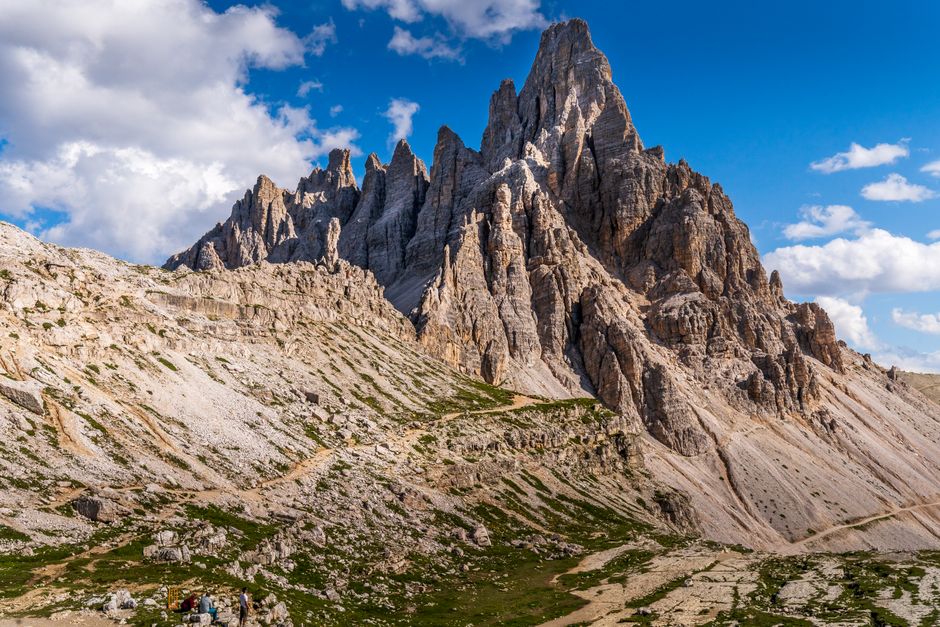
You are standing below a pale limestone wall at Passo Gardena. Above you, a steel cable follows the rock, while hikers clip metal carabiners from one section to the next. The route looks exciting, but the real question is simple: can a fit hiker with no climbing background handle a first via ferrata safely?
Yes, with the right route, dry weather, approved equipment, and enough time to turn around. A via ferrata is not a normal hiking trail with extra railings. It is a mountain route that combines steep walking, exposed rock, ladders, ledges, and fixed protection. Your first day should teach you how that system feels, not test your courage.
What makes a Dolomites via ferrata beginner-friendly?
The best first route has three qualities: modest technical difficulty, a clear approach, and a simple descent. The scenery matters, but it comes fourth. A famous route with a suspension bridge can still be a poor introduction if the approach takes five hours or the descent crosses loose, steep ground.
Learn the difference between hiking and climbing
On an equipped trail, you move along a steel cable fixed to the rock. Iron steps, ladders, and carved footholds help you gain height. Your via ferrata set connects your harness to the cable with two carabiners, allowing one carabiner to stay attached while you move the other past each anchor point.
The cable reduces the chance of sliding off the route, but it does not remove exposure, fatigue, falling rocks, or bad weather. You still need balance, steady footwork, and enough strength to control your body on steep ground. The system protects a careful climber; it cannot make an unsafe decision safe.
Choose a low-grade route with an easy retreat
Look for an easy or beginner grade, a route below 3,000 metres, and a descent that returns to a marked trail. The Gran Cir near Passo Gardena fits that pattern. The local route information lists 2.8 kilometres, 463 metres of ascent, a high point of 2,579 metres, and about 2 hours 25 minutes for the route. The same source warns that the lower section becomes slippery after rain and that some upper sections require sure-footed movement without a cable. Check the current Gran Cir route information before departure.
Treat exposure as a separate skill
A route can receive an easy technical grade and still feel intense if the drop is visible. Before booking, ask yourself if you can stand on a narrow ledge without freezing. If heights already cause panic on open staircases or balconies, begin with a guided practice route or a protected climbing area at lower altitude.
Which beginner route should you choose?
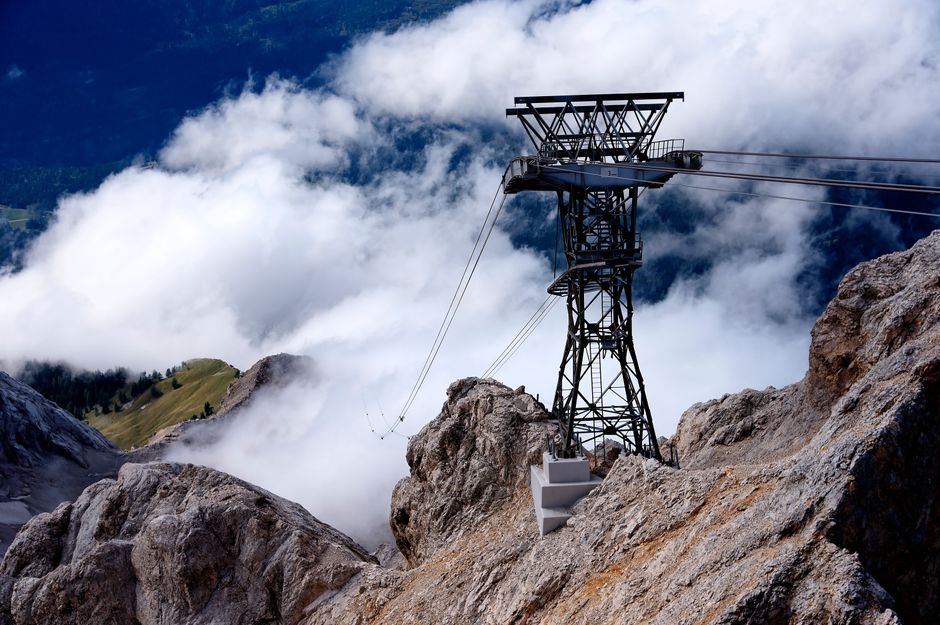
For a first day, I would choose Gran Cir or Sass de Stria before Tridentina al Pisciadù. The first two keep the technical demands manageable. Tridentina is a superb goal for a second or third outing, but its ladders, exposure, and popularity can overwhelm a new climber.
| Route | Area | Published time | Best use | Verdict |
|---|---|---|---|---|
| Sass de Stria | Falzarego | 1.5–2 hours | Short first taste | Best for cautious beginners |
| Gran Cir | Passo Gardena | About 2–2.5 hours | Views and steady practice | Best all-round first route |
| Oskar Schuster | Sassolungo | 3–4 hours | Confident hikers | Save for a second outing |
| Brigata Tridentina | Sella Group | 3–4 hours | Classic ladders and bridge | Not my first-day choice |
These times describe the route itself, not the full mountain day. Add the approach, breaks, queueing, and descent. A two-hour ferrata can become a five-hour outing after a lift ride, a 45-minute approach, and a slow return. Official listings also change with snow, rockfall, maintenance, and lift operations, so check the local tourism office or mountain guide service.
Do not select a route because a photograph shows a dramatic bridge. Select it because you understand the grade, height, approach, escape options, and descent. For a first via ferrata in the Dolomites, a shorter route that leaves you eager for another day beats a famous route that leaves you exhausted and frightened.
How should you prepare for the climb?
Preparation should remove small problems before they become mountain problems. A loose harness, late start, empty water bottle, or unclear descent can turn a pleasant route into a rushed one. Use this sequence the evening before and again at the trailhead.
- Check the route status. Confirm that the ferrata is open, the lift or bus is running, and the descent remains passable. Look for snow, storms, rockfall, and maintenance notices.
- Read the whole route description. Mark the trailhead, cable start, highest point, escape paths, summit, and descent. Do not rely on a pin that shows only the parking area.
- Check the forecast by hour. Start early enough to finish exposed sections before the usual afternoon storm window. Thunder near fixed metal cables is a reason to retreat before the weather reaches you.
- Pack for a mountain, not a city walk. Carry water, food, a warm layer, waterproof protection, sun protection, a small first-aid kit, a charged phone, and an offline map.
- Test the equipment before the first cable. Adjust the harness over your clothing. Check that both carabiners close, the energy absorber shows no damage, and the helmet sits securely.
- Set a turnaround time. Tell your group when you will retreat if you have not reached a certain point. A fixed decision is easier than an argument made beside an exposed ladder.
Build fitness with the right effort
You do not need a climber’s physique, but you need several hours of uphill walking and the ability to step high without losing balance. Train with stairs, uneven trails, and a light pack. Include downhill walking because the descent often exposes tired knees and poor foot placement.
Practice the clipping movement
At the first anchor, stop and watch the cable. Keep one carabiner attached while moving the other. Clip past the anchor one at a time, and never detach both from the cable. A guide can demonstrate this in minutes; learning it while a queue forms behind you adds needless pressure.
Which safety rules matter most on a first route?
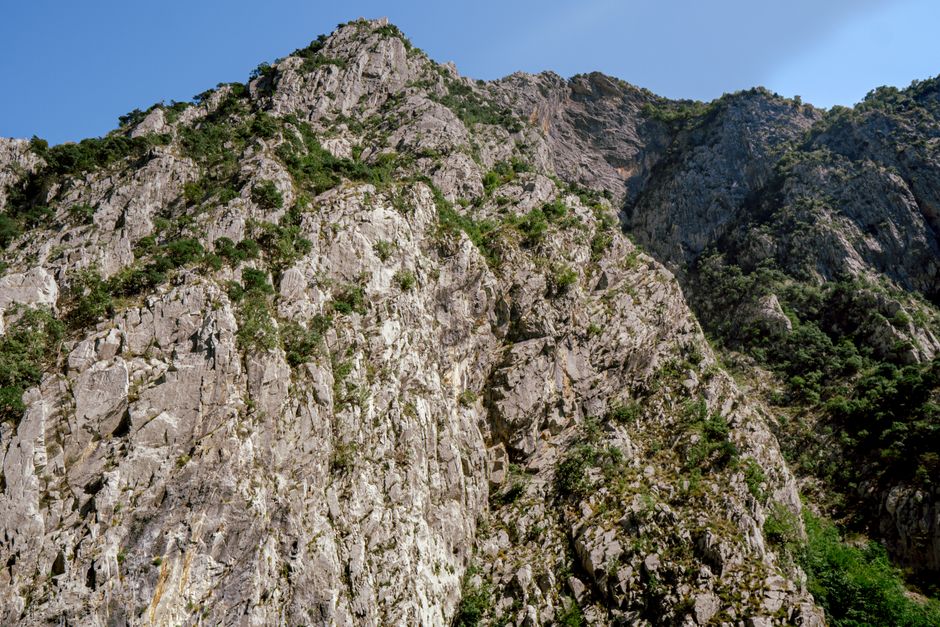
My strongest recommendation is to hire a mountain guide for your first Dolomites via ferrata. A guide does more than carry technical knowledge. A good one chooses a route that matches your fear of heights, checks the forecast, spots loose rock, controls the pace, and turns the day around before a small concern becomes an emergency.
Use the cable correctly
Keep both carabiners connected whenever you are on a protected section. At an anchor, move one carabiner beyond the attachment point, confirm that it has closed, and then move the second. Keep space from the person ahead. Only one person should occupy the cable section between two anchors because a fall can pull other people into the system.
Do not use the cable as a handrail while unclipped. Do not tie yourself to it with ordinary webbing, a sling, or a random rope. Those items can lack the energy absorption required for a via ferrata fall. Use a certified, current-generation via ferrata set designed for the activity.
Manage rockfall and storms
Wear your helmet from the approach to the descent, not only on the steepest wall. Keep your voice low and warn people below if you dislodge a stone. Rain makes rock and iron slick, while lightning turns an exposed metal route into a poor place to stand. The Dolomites safety guidance also recommends checking each other’s equipment and avoiding overtaking in exposed places.
If you feel dizzy, cannot control your breathing, or need to pull with your arms on every move, stop. Tell your partner or guide immediately. Fear often becomes manageable after a pause, water, and a slower pace. Hiding it creates the real danger.
Do you need a guide for your first via ferrata?
Can a fit hiker go alone?
A fit hiker without climbing experience can physically manage an easy route, but fitness does not teach cable technique, route-finding, or judgment in changing weather. Solo travel adds another problem: nobody can check your harness, call for help, or notice that fear has changed your movement. For a first attempt, solo climbing is a poor trade.
What does a guide change?
A guide can give a short equipment lesson at the trailhead, choose a route with a manageable approach, and adjust the day as conditions change. Ask how many people will be in the group, what equipment is included, the expected walking time, the route grade, and the plan if somebody wants to stop. A small group gives you more useful attention than a large tourist outing.
When should a beginner postpone?
Postpone if the forecast shows thunderstorms, the rock is wet, snow covers the cable, or the route description lists a closed section. Also postpone if you have a recent injury, poor balance, severe fear of heights, or no way to return before dark. A guide cannot override a closed route or turn winter conditions into summer conditions.
The best first day may include a short practice ferrata followed by an ordinary scenic hike. That combination teaches the movement without forcing you to spend every minute above a drop. You can then choose a longer route with real confidence instead of relying on bravado.