
You arrive at the meeting point and discover that the “easy” canyon includes a 12-metre jump, a strong river current, and a guide who assumes you can swim confidently in cold water. That is the wrong kind of surprise.
For a first canyoning trip in the Alps, book a guided half-day route with no mandatory jumps, a short approach walk, and full equipment included. The best beginner trip is not the most dramatic canyon. It is the one that lets you learn rappelling, sliding, and moving through flowing water without feeling trapped by the terrain.
Alpine canyoning can be an excellent first adventure, but the booking details matter more than the photographs. You need to check the route grade, water conditions, swimming requirements, group size, guide qualifications, cancellation policy, and equipment list before paying.
Is Alpine Canyoning Safe for a First Trip? Yes, With the Right Route
Beginner canyoning is controlled adventure, not a casual river walk. You move through a narrow gorge using several skills: walking on slippery rock, swimming short sections, jumping only when the guide permits it, sliding over smooth rock, and descending with a rope. The guide manages the technical parts, but you still need to follow instructions quickly.
What the guide should control
A qualified guide checks the forecast, recent rainfall, water level, and route condition before the group enters the canyon. During the descent, the guide chooses the safest line, sets ropes, checks anchors, and decides whether a jump or slide is suitable. A reputable operator should also explain how to land, how to hold the rope, and what to do if you become tired or frightened.
Ask how many guests will share one guide. For a beginner group, six to eight people per guide is a sensible ceiling. A larger group can create long waits beside cold water and makes individual coaching harder.
The physical baseline you need
You do not need climbing experience, but you should be comfortable swimming and walking for two to four hours on uneven ground. Many routes include cold pools, exposed rock, and a walk back uphill. The water may sit close to 10°C even on a warm summer day, so the wetsuit helps, but it does not remove the shock of cold water on your face.
Tell the guide about asthma, heart problems, recent injuries, fear of heights, or weak swimming skills before the activity starts. That information can change the route choice. A guide who dismisses those concerns is a reason to leave, not a reason to prove yourself.
Which Alpine Canyon Should a Beginner Book? Choose Water and Access First
The clearest beginner choice is a canyon with a short approach, reliable access, moderate water flow, and optional jumps. Region matters because Alpine terrain changes quickly. A route that feels gentle in late August can become unsuitable after heavy rain.
| Region | Beginner appeal | Typical challenge | Best booking choice |
|---|---|---|---|
| Ticino, Switzerland | Warm summer weather and polished granite slides | Cold pools and slippery rock | Introductory half-day route with optional jumps |
| Interlaken, Switzerland | Many guided options and easy tourist access | Busy groups during peak season | Small-group tour starting early in the day |
| Chamonix, France | Strong mountain scenery and varied terrain | Colder water and longer approaches on some routes | Low-commitment route with no required abseils |
| Ötztal, Austria | Well-developed outdoor infrastructure | Changing water levels after storms | Operator with clear weather cancellation rules |
These regions are not interchangeable. Ticino usually suits people who want a playful first descent with slides and clear pools. Interlaken works well for visitors who want simple logistics and several activity choices nearby. Chamonix is better for mountain scenery than for the easiest possible introduction. Ötztal can be a strong choice when the operator explains water conditions clearly.
Pick the route before picking the destination. A five-hour canyon with several mandatory rappels is a poor first booking even if the landscape looks perfect online.
What Does a Beginner Canyoning Booking Need to Include?
Does the price include the equipment?
It should include a helmet, full-body or two-piece neoprene wetsuit, canyoning harness, ropes, and specialist footwear or footwear guidance. Check the thickness of the wetsuit. A 5 mm suit is common for colder Alpine water, while a thinner suit may feel inadequate during long waits in pools. Bring a swimsuit, towel, dry clothes, and secure footwear if the operator does not provide canyon shoes.
How long should the first trip be?
Choose a half-day activity with roughly two to three hours inside the canyon. Allow extra time for changing, safety instruction, the approach walk, and the return route. A full-day descent can sound better value, but fatigue makes slippery rock and rope work harder. For most beginners, the shorter trip gives enough excitement without turning the final hour into survival mode.
What should the booking page state?
Look for the minimum age, swimming requirement, meeting point, total duration, route grade, group size, required clothing, transport arrangements, and weather policy. “Suitable for everyone” is weak information. You want a sentence that explains the real demands, such as a 30-minute uphill approach, a 20-metre rappel, or a short section of swimming.
Confirm the cancellation rule before paying. Mountain weather can change fast, and water levels may rise after storms. The safest operators cancel or move the trip when conditions cross their limit. A strict weather policy is a sign of good risk management, not poor service.
What Can Go Wrong? Avoid These Five Booking Mistakes
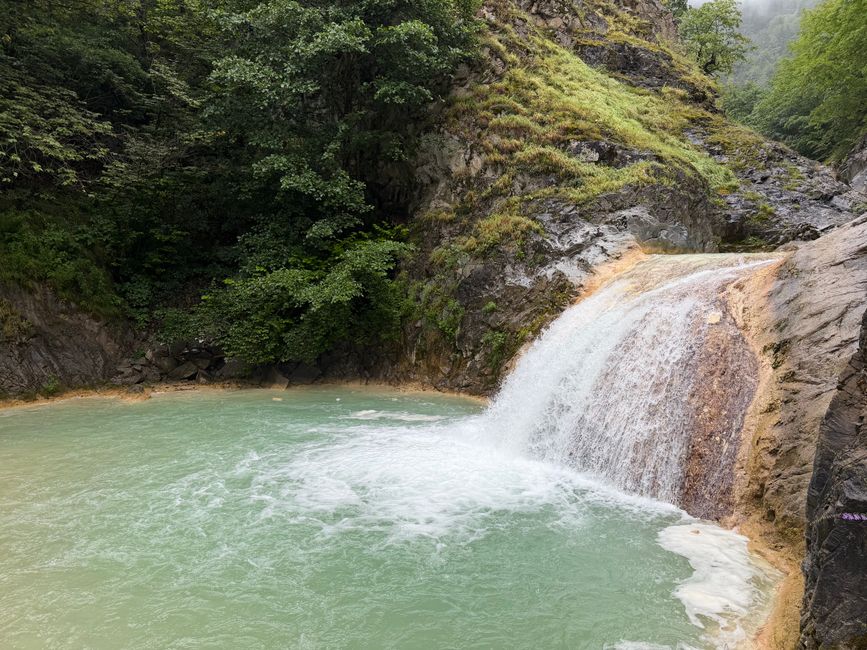
- Booking from the photograph. A beautiful blue pool tells you almost nothing about the route. Read the technical description and ask how many jumps, rappels, and swims are mandatory.
- Ignoring the approach walk. “Three hours of canyoning” may include a steep 45-minute climb before you reach the water. Check the total walking time and elevation gain.
- Assuming every jump is optional. Some routes allow rappelling around a jump. Others do not. Ask directly: “Can I avoid every jump if I change my mind?”
- Choosing the cheapest tour. A low price may reflect a large group, limited equipment, or transport that is not included. Compare what the fee covers, not only the headline number.
- Going after heavy rain. Do not pressure an operator to run a trip because you have already travelled to the valley. Fast water can change a beginner route completely. A cancellation protects you from a serious accident.
There is one more mistake that causes unnecessary misery: wearing cotton. Cotton stays wet and cold. Use a swimsuit under the wetsuit, bring a warm layer for after the activity, and leave valuables at the meeting point unless the operator provides a secure storage option.
For a first trip, my clear pick is a small-group half-day route with optional jumps, a 5 mm wetsuit, and a published weather cancellation policy. That combination gives beginners room to learn without turning one nervous moment into a forced obstacle.
When Should You Skip Canyoning? Make the Call Before Paying
Skip Alpine canyoning for now if you cannot swim confidently, have a fresh injury, dislike cold water, or feel unable to follow a guide’s instructions under pressure. Choose a dry canyon walk, a mountain lake trip, or a supervised rafting session instead; those activities can provide mountain scenery with fewer confined-water problems.
Skip the booking if the operator will not state the route grade, group size, equipment list, or weather policy, because those missing details make it impossible to judge the real risk. Skip it too if the trip requires a long approach that exceeds your fitness, if several jumps are mandatory, or if the guide treats fear as something to mock rather than manage.
The right beginner canyon should leave you tired, cold, and pleased that you learned new skills. It should not leave you wondering why the booking page hid the hardest part. Choose a route with honest limits, a patient guide, and an easy exit plan, and the Alps can deliver a first canyoning experience that feels challenging without becoming reckless.